

M367 White Pill vs Oxycodone: Which Is Stronger and How Do These Pain Medications Truly Compare?
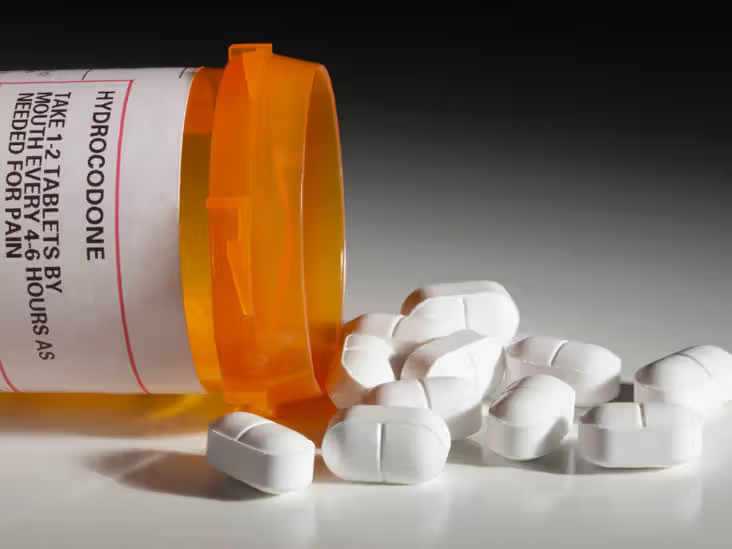
The M367 white pill is a prescription opioid pain medication that combines hydrocodone (10 mg) with acetaminophen (325 mg). It is widely prescribed for moderate to moderately severe pain and is commonly used in short term pain management following surgery, injury, or dental procedures.
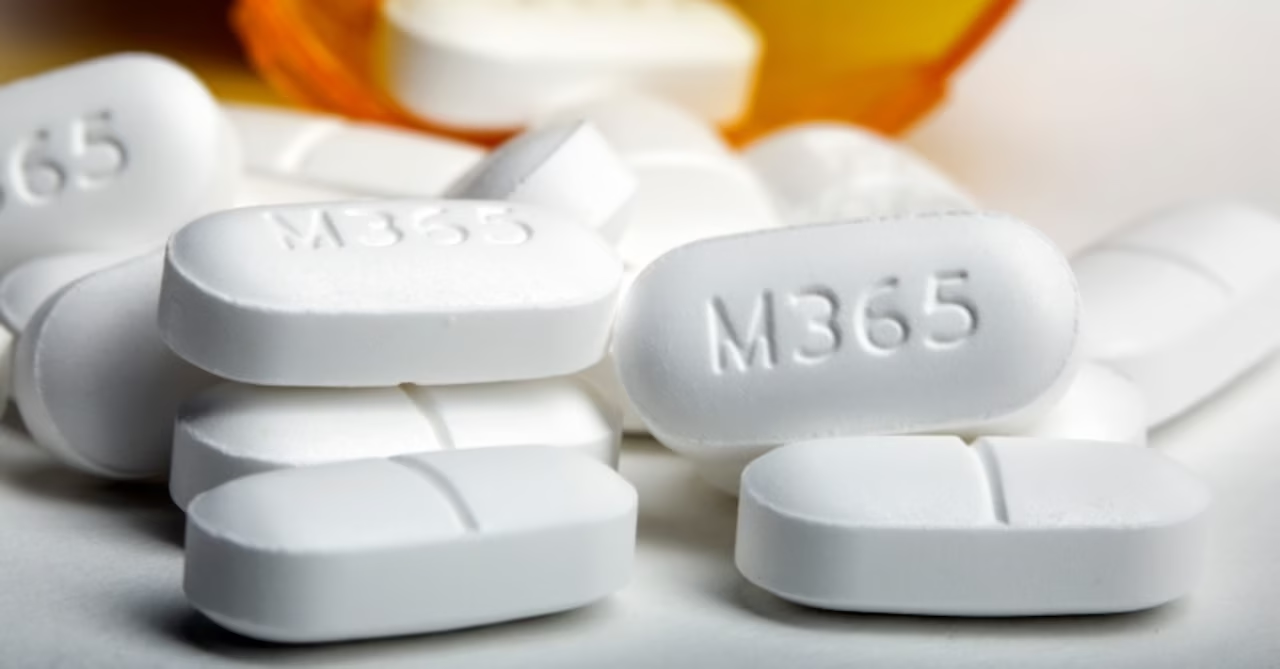
Most users encounter this medication through its physical appearance rather than its chemical name, which explains why it is frequently searched online as the m367 white oblong pill, m367 white oval pill, white pill M367, or white pill with M367. Regardless of how it is described, these terms all refer to the same hydrocodone acetaminophen tablet.
What Is the M367 White Pill?
 The M367 white pill is a prescription opioid pain medication that contains hydrocodone 10 mg combined with acetaminophen 325 mg. It is most commonly prescribed for moderate to moderately severe pain that does not respond well to non-opioid analgesics alone.
Patients at Tegrity Pharma frequently identify this tablet by its appearance rather than its name, leading to common searches such as m367 white oblong pill, m367 white oval pill, white pill M367, pill with M367, or m367 oval white pill. All of these descriptions refer to the same medication.
The pill is oval, white, and clearly imprinted with “M367”, which is the most reliable way to confirm its identity.
Most people recognize this medication by appearance rather than name, which explains frequent searches such as:
m367 white oblong pill
m367 white oval pill
white pill M367
m367 oval white pill
white oblong pill M367
m367 white long pill
white pill with M367
m367 pill white
pill M367
pill with M367
All of these terms describe the same hydrocodone acetaminophen tablet.
What Oxycodone Is and How It Differs
Oxycodone is also an opioid analgesic, but it is considered stronger than hydrocodone on a milligram-to-milligram basis. It is prescribed for moderate to severe pain, particularly when pain does not respond adequately to medications like the M367 pill.
Unlike hydrocodone combinations, oxycodone is available in a wider range of formulations. Some oxycodone tablets contain only oxycodone, while others are combined with acetaminophen. It also exists in both immediate-release and extended-release forms, which allows for longer pain control in certain situations.
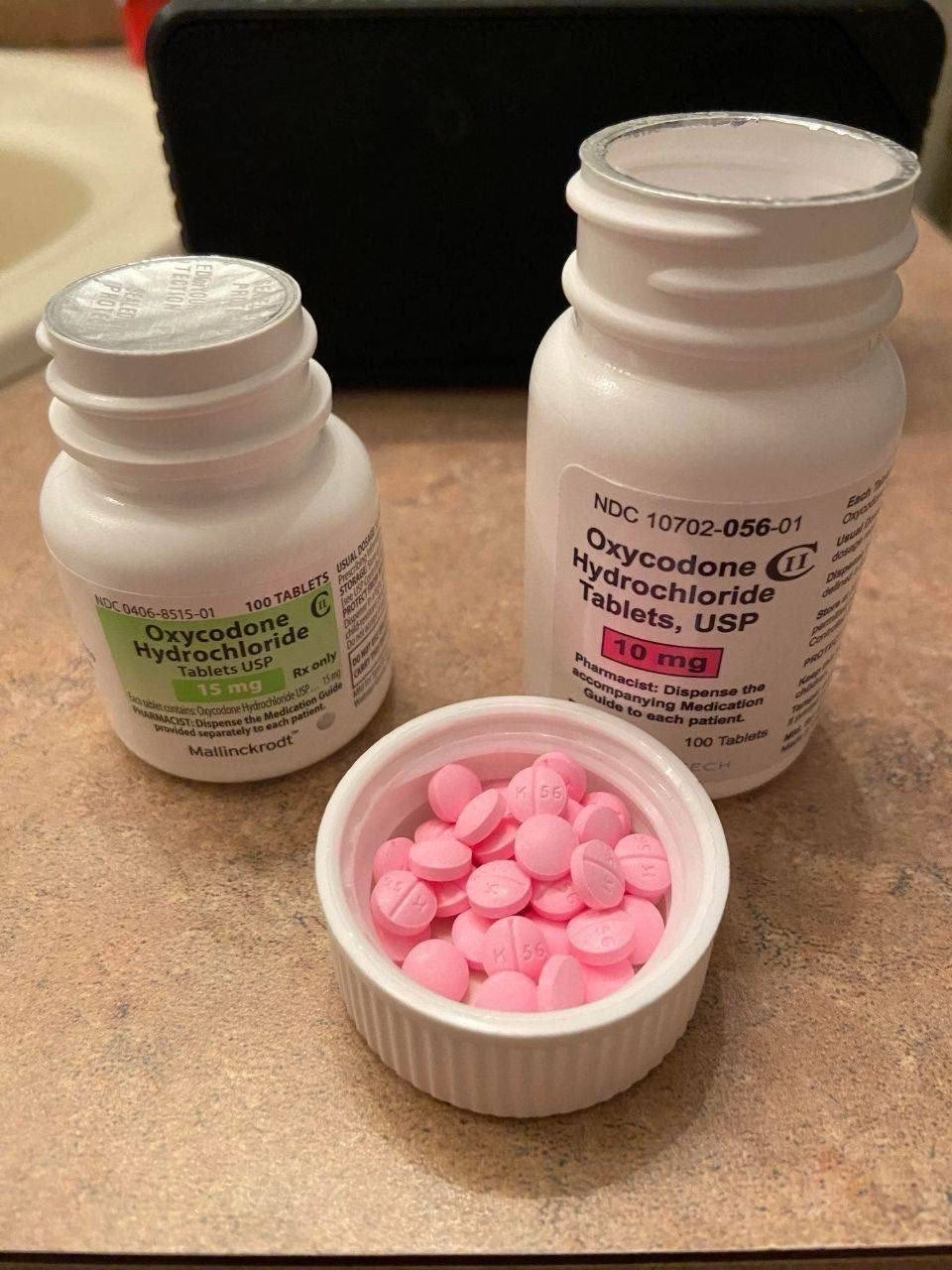
People comparing these two medications often encounter oxycodone pill identifiers such as the RP 30s pill or K 56 pink pill, which are significantly more potent than hydrocodone-based tablets.
Why the M367 White Pill Is One of the Most Searched Prescription Tablets
The M367 white pill consistently appears in search results because many patients first encounter this medication visually rather than by name. It is commonly described online as the m367 white oblong pill, m367 white oval pill, white pill M367, pill with M367, or m367 oval white pill. These variations all refer to the same prescription tablet containing hydrocodone 10 mg and acetaminophen 325 mg.
This tablet is widely prescribed across medical and dental settings, which explains why it appears so often in pill identification searches, medication comparisons, and “which is stronger” queries involving oxycodone.
Exact Identification: What the M367 White Pill Looks Like and What It Contains
The m367 white pill is oval, white, and film-coated, with the imprint “M367” stamped clearly on one side. The imprint is the definitive identifier and is more reliable than color, size, or shape alone.
Pharmacologically, the tablet contains:
Hydrocodone bitartrate 10 mg, an opioid analgesic
Acetaminophen 325 mg, a non-opioid pain reliever
Because of this combination, the medication is sometimes informally referred to as a 10/325 pill, a term patients often use when comparing it to oxycodone acetaminophen products.
How the M367 Hydrocodone Combination Works in the Body
Hydrocodone is an opioid that binds to mu-opioid receptors in the brain and spinal cord. This action changes how pain signals are processed and reduces the emotional response to pain. Acetaminophen works through a different mechanism, enhancing pain relief without acting on opioid receptors.
When combined, these two ingredients provide effective pain control while limiting the total opioid dose. This pharmacologic balance is why the m367 hydrocodone tablet is commonly selected for moderate pain before stronger opioids are considered.
M367 White Pill vs Oxycodone: Strength Explained Clearly
1. Active Opioid Ingredient
M367 white pill: Hydrocodone
Oxycodone pills: Oxycodone
Although both are opioid analgesics, oxycodone has greater receptor binding strength, which makes it more potent.
2. Strength and Potency
A common question is:
What’s stronger, hydrocodone or oxycodone?
Medical answer: Oxycodone is stronger.
Even when dosage numbers look similar, the drugs are not equal in effect.
Strength Comparison Table
| Feature | M367 White Pill | Oxycodone |
|---|---|---|
| Opioid type | Hydrocodone | Oxycodone |
| Common strength example | 10/325 pill | 10 mg |
| Relative potency | Moderate | Higher |
| Pain level treated | Moderate | Moderate to severe |
| Acetaminophen included | Yes | Sometimes |
| Common identifiers | White oval M367 | RP 30s, K 56 pink pill |
This table helps clarify the difference between oxycodone and hydrocodone in practical terms.
One of the most common voice searches related to pain medication is:
“What’s stronger, hydrocodone or oxycodone?”
From a clinical standpoint, oxycodone is stronger than hydrocodone, including the hydrocodone found in the M367 white pill. This means oxycodone produces greater pain relief at equivalent milligram doses.
This difference is not always intuitive to patients because dosage numbers may appear similar. For example, a hydrocodone 10/325 pill and an oxycodone 10 mg tablet do not deliver the same analgesic effect. Potency is determined by how strongly a medication activates opioid receptors, not just the number printed on the pill.
Why the M367 White Pill Is Often Prescribed First
In modern pain management, physicians typically follow a stepwise approach. The M367 white oval pill is often used before oxycodone because it provides sufficient pain relief for many patients while carrying a lower overall opioid potency.
This strategy helps clinicians:
Reduce opioid exposure
Lower the likelihood of severe sedation
Maintain flexibility if pain worsens
If pain remains uncontrolled or becomes chronic, providers may reassess and consider stronger opioids such as oxycodone.
Pain Types Commonly Treated With Each Medication
M367 White Pill
Post-surgical pain
Dental pain
Acute musculoskeletal injuries
Short term moderate pain episodes
Oxycodone
Severe injury-related pain
Pain not responding to hydrocodone
Certain cancer-related pain conditions
High-intensity acute pain
These different use cases explain why the two medications are not interchangeable.
Pill Confusion: Why These Two Are Often Mistaken
Searches like white oblong pill M367 or pill with M367 often occur because patients rely on color and shape rather than imprint codes.
Examples:
M367 oval white pill → hydrocodone
RP 30s pill → oxycodone (much stronger)
K 56 pink pill → oxycodone formulation
Tegrity Pharma emphasizes imprint verification, since color alone does not indicate strength or drug class.
Duration of Action and Dosing Differences
The m367 white pill is an immediate-release medication, usually providing pain relief for approximately four to six hours. It is commonly prescribed on an as-needed basis rather than for continuous, around-the-clock use.
Oxycodone differs in that it can be formulated for extended release. These longer-acting versions are designed for persistent pain that requires steady opioid levels in the bloodstream. This distinction alone makes oxycodone more suitable for certain chronic pain scenarios.
Side Effects: Similarities and Differences
Both medications share common opioid-related side effects, including drowsiness, constipation, nausea, and dizziness. However, because oxycodone is more potent, these effects can be more pronounced.
Patients taking oxycodone may experience deeper sedation and a higher risk of respiratory depression, especially at higher doses or when combined with other central nervous system depressants. This is one reason oxycodone requires careful monitoring and clear dosing instructions.
Why Pill Confusion Happens So Often
Many opioid tablets are white, oval, or round, which leads to frequent confusion. A white oblong pill M367 may look similar to other prescription tablets but contains a very specific hydrocodone acetaminophen formulation.
By contrast, pills such as the RP 30s pill contain oxycodone at much higher strength. Relying on color or shape alone can lead to dangerous assumptions, which is why imprint codes are essential for accurate identification.
Real World Use: Patient Experience Differences
In clinical settings, patients often describe the M367 white pill as providing reliable pain relief without overwhelming central nervous system effects. Oxycodone, while more effective for severe pain, can feel significantly stronger and may affect alertness and coordination more noticeably.
These experiential differences reinforce why the two medications are not interchangeable, even when dosage numbers appear similar.
Navigational and Transactional Search Context
Searches like pill M367, m367 hydrocodone, difference between oxycodone and hydrocodone, or oxycodone vs hydrocodone often indicate a need for clarity rather than intent to act. Users are trying to understand what a medication is, why it was prescribed, or how it compares to another option.
Tegrity Pharma addresses this need by offering structured, medically accurate comparisons that help users interpret pill markings, understand relative strength, and prepare informed questions for healthcare providers.
Choosing Between M367 Pill and to Buy Oxycodone
The M367 white pill and oxycodone both play important roles in pain management, but they are not equivalent. M 367 Pill delivers moderate pain relief through a hydrocodone acetaminophen combination and is commonly used as an initial opioid option. Oxycodone is more potent and is reserved for more severe or persistent pain.
Understanding these differences improves medication awareness, reduces confusion, and supports safer pain management decisions.
Role of Tegrity Pharma in Medication Education
Tegrity Pharma serves as a medication education and pill identification resource, helping users understand what specific pills are, how they compare, and why one medication may be chosen over another. Clear explanations reduce confusion, support safer medication handling, and encourage informed conversations with healthcare professionals.
Final Comparison Insight
When comparing the M367 white pill and oxycodone, the key distinction is strength and clinical role. The M367 tablet delivers moderate pain relief through a hydrocodone acetaminophen combination and is commonly used as an initial opioid option. Oxycodone is more potent, carries higher risk, and is reserved for more severe or persistent pain.
People Also Ask
What is the M367 white pill used for?
The M367 white pill is used to treat moderate to moderately severe pain. It contains hydrocodone and acetaminophen and is commonly prescribed after surgery, dental procedures, or injury when non-opioid pain relievers are not sufficient.
Is the M367 white pill the same as oxycodone?
No. The M367 white pill contains hydrocodone with acetaminophen, while oxycodone is a different opioid medication. Oxycodone is stronger than hydrocodone and is typically prescribed for more severe pain.
Which is stronger, hydrocodone or oxycodone?
Oxycodone is stronger than hydrocodone on a milligram-to-milligram basis. This means oxycodone provides more potent pain relief at similar doses and carries a higher risk of side effects.
What does a white pill with M367 mean?
A white pill with M367 indicates a hydrocodone 10 mg and acetaminophen 325 mg tablet. The imprint code is the most reliable way to identify this medication.
Why do doctors prescribe M367 before oxycodone?
Doctors often prescribe the M367 white pill first because it offers effective pain relief with lower opioid potency. This stepwise approach helps reduce opioid exposure while still managing pain adequately.